Details:
Technology Used
- Ansys SpaceClaim, Ansys Fluent, Ansys Twin Builder, Python, PyFluent
Objective:
Develop high-fidelity simulation capabilities to detect thermal hotspots, maintain uniform cell temperatures, and streamline the design evaluation process.
Challenge:
Battery packs are susceptible to localized hotspots from uneven current distribution and thermal gradients, accelerating degradation and reducing lifespan. Traditional workflows were slow, restricting design iteration and evaluation of multiple scenarios.
Solution:
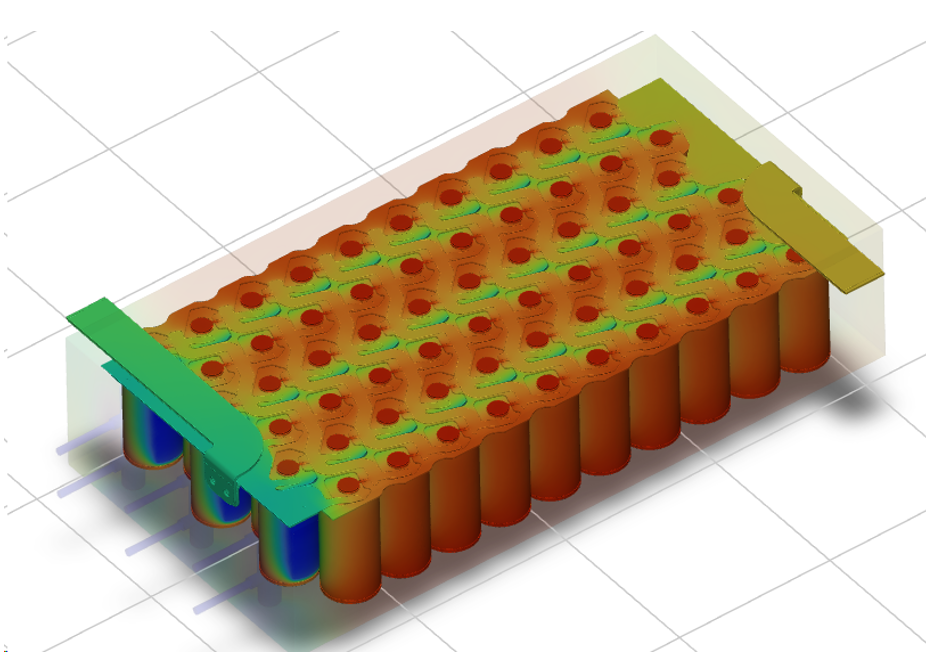
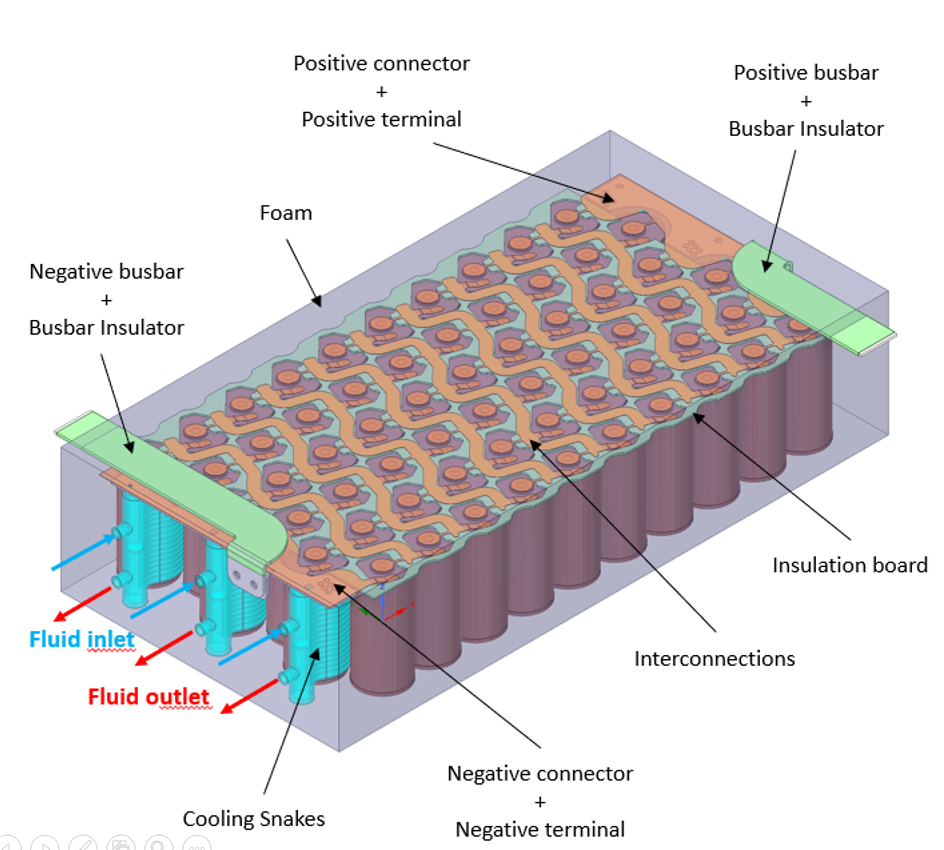
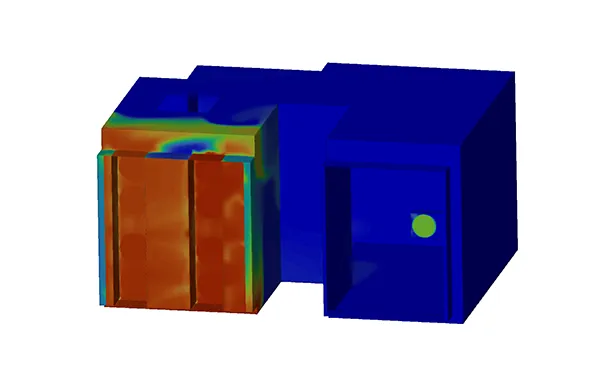
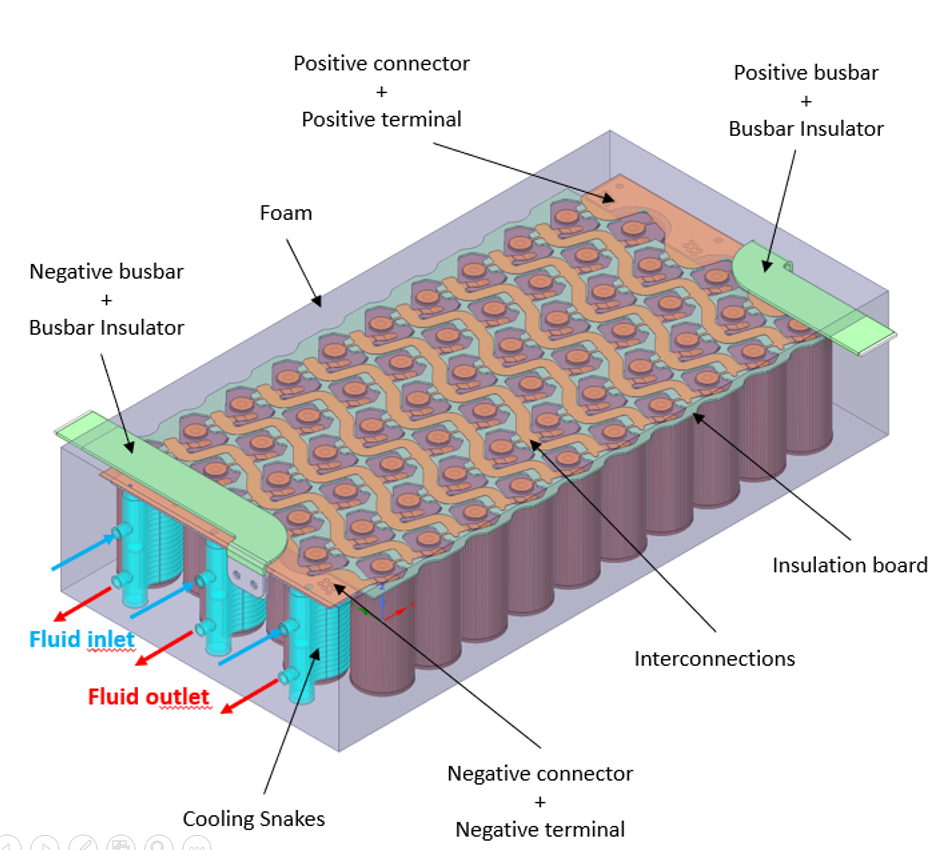
A detailed 3D model of the battery pack was developed, capturing modules and internal cell components. Coupled electro-thermal simulations with equivalent circuit model (ECM) and circuit network (CN) model accurately represented electrical and thermal interactions. Transient simulations under realistic drive cycles identified critical hotspots and temperature variations. Solver optimizations and Python automation accelerated calculations, while a Reduced Order Model enabled rapid design iteration and Digital Twin integration.
Conclusion:
The simulation framework ensures uniform temperatures, mitigates hotspots, and extends battery life. Reduced Order Modeling and Digital Twin approaches allow fast design optimization and real-time performance evaluation, providing a robust tool for advanced battery thermal management.