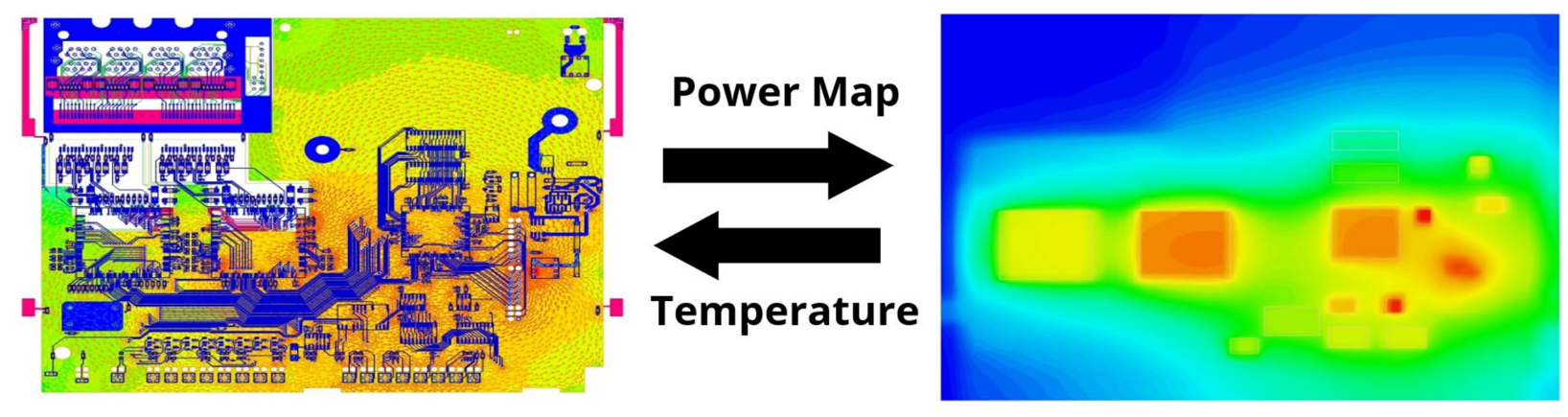
Details:
Technologies Used
- Ansys Discovery
- Ansys Icepak
Objective:
Ensure PCB thermal reliability by accurately predicting temperature distributions, identifying potential hotspots, and providing a coupled electro-thermal analysis workflow based on detailed ECAD data.
Challenge:
PCBs exhibit complex thermal behavior due to non-uniform heat generation in traces and vias, directional heat conduction across multiple layers, and temperature-dependent electrical losses. Traditional thermal analysis methods often fail to capture these coupled phenomena, increasing the risk of overheating and compromising reliability.
Solution:
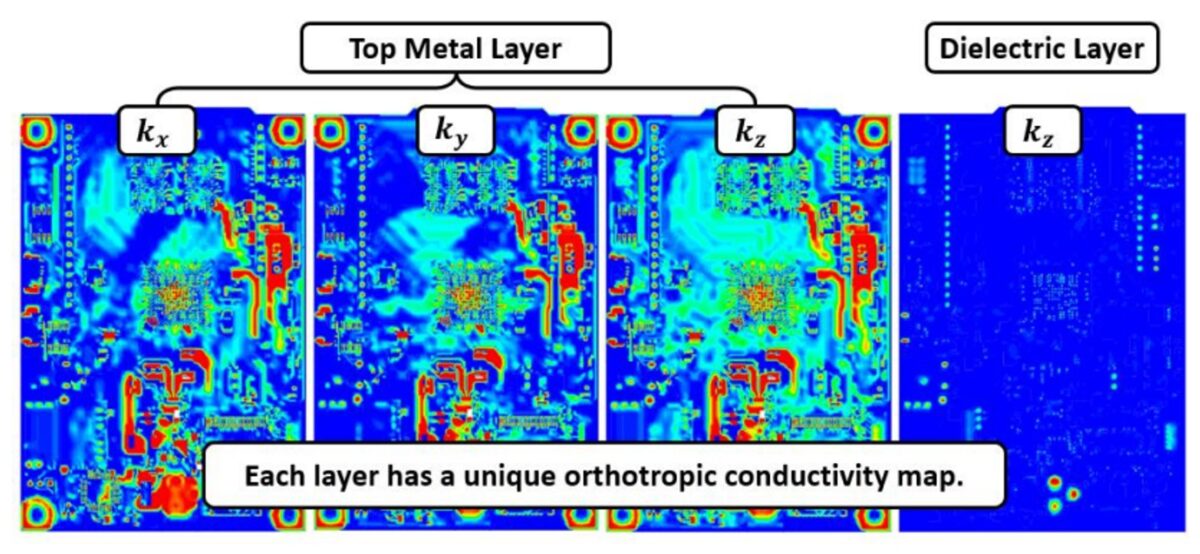
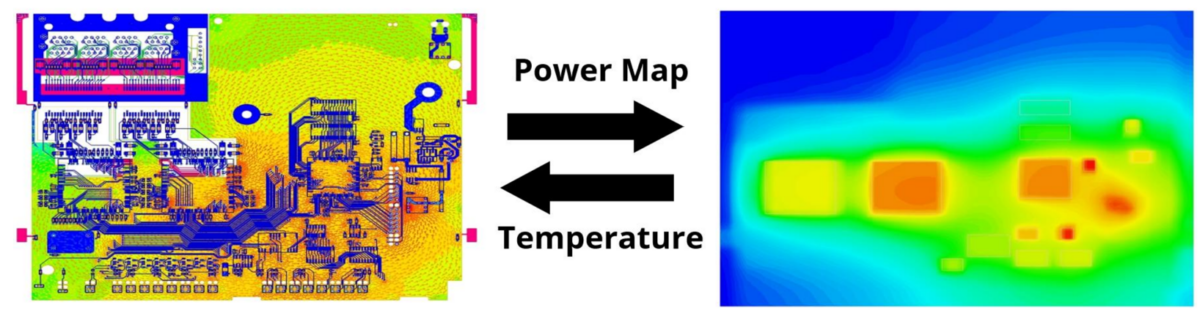
Detailed ECAD data was processed to ensure accurate PCB geometry representation. Orthotropic thermal conductivity maps were generated for each layer based on trace and via layouts. Resistive heating in traces and vias was applied using DCIR results, and a coupled electro-thermal workflow between Siwave and Icepak was implemented to iteratively converge temperature-dependent electrical effects. Full conjugate heat transfer simulations were performed, encompassing the PCB, mounted components, and surrounding airflow environment. The workflow allowed identification of thermal hotspots, evaluation of mitigation strategies, and included technology transfer training to enable the customer to independently perform future analyses.
Conclusion:
The simulation framework accurately predicted PCB temperature distributions, identified and mitigated thermal hotspots, and delivered a robust methodology for coupled electro-thermal analysis. The customer’s engineering team gained the ability to perform independent thermal reliability studies, increasing confidence in design performance and product longevity.