Details:
Technologies Used:
- Ansys Discovery
- Ansys Fluent
- UDF
- VOF
Objective:
Determine accurate fluid–fluid mass transfer coefficients in systems where limited experimental data are available.
Challenge:
In column and filter-based processes, mass transfer must be modeled with high accuracy. However, experimental data for fluid–fluid mass transfer coefficients are scarce, and commonly used correlations (e.g. simple Sherwood number formulations) were insufficient to describe the observed behavior in this specific fluid–fluid system.
Solution:
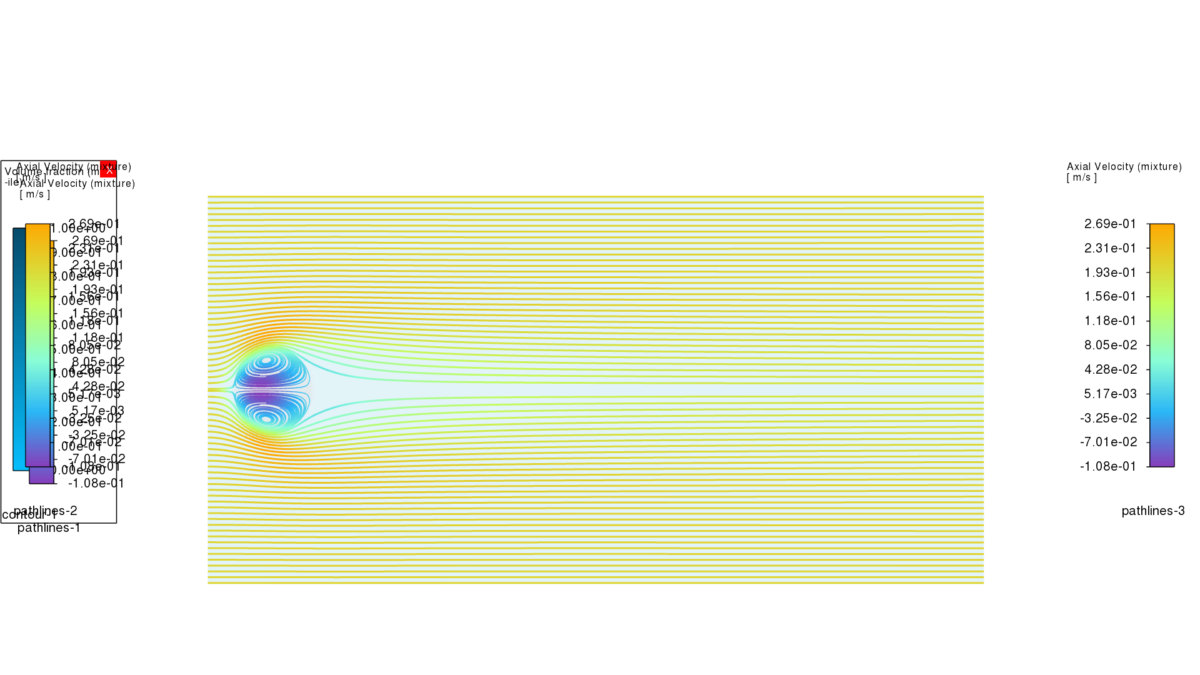
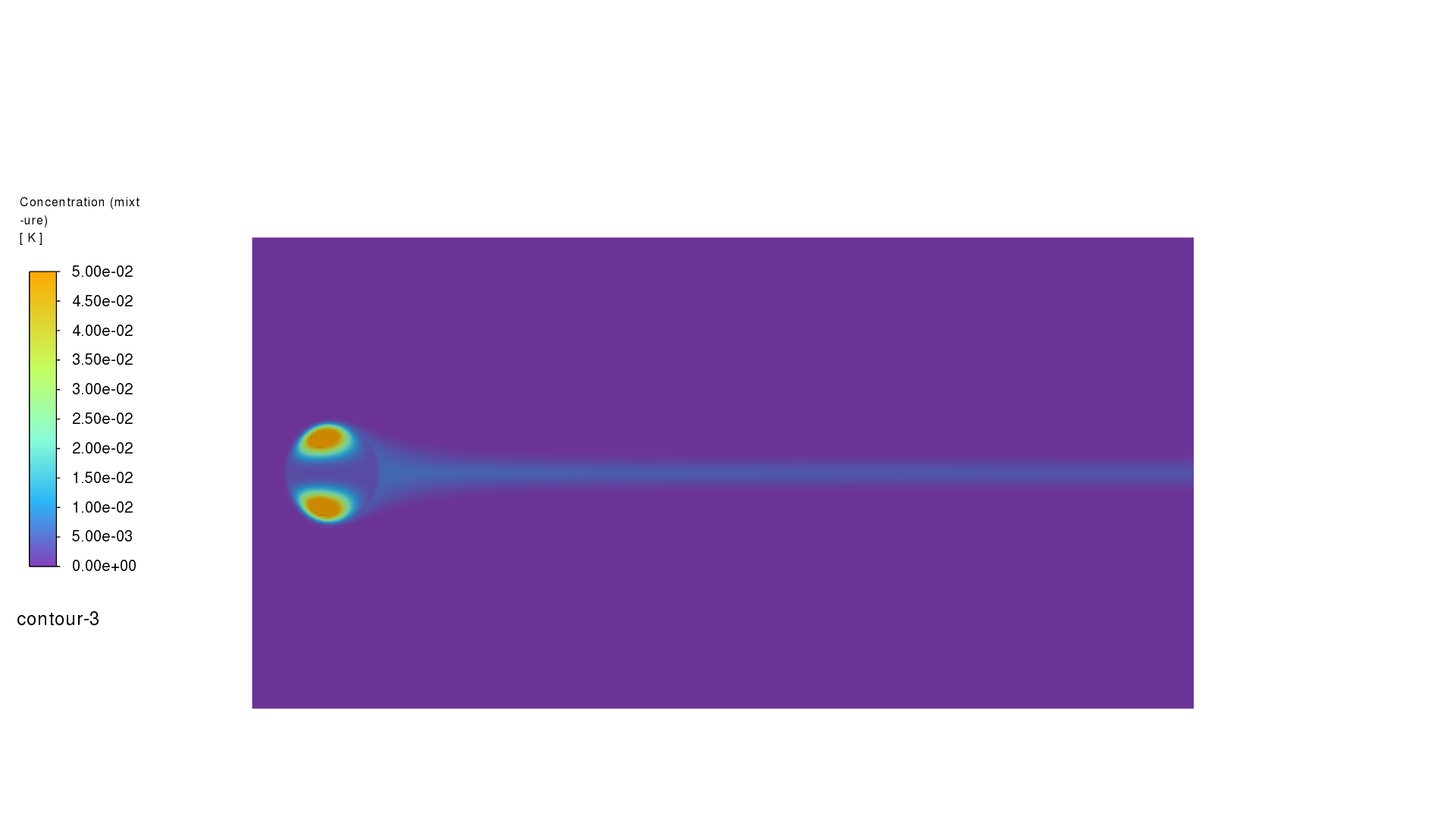
A simplified 2D CFD model was developed using a Volume of Fluid (VOF) approach to simulate a single droplet suspended in a continuous flow. The flow fields both inside and outside the droplet were resolved in detail, allowing the mass transfer process to occur naturally through diffusion and convection.
By tracking the concentration decay within the droplet over time, the numerical results were fitted to the corresponding analytical solution, enabling identification of the effective mass transfer coefficient for the system.
Conclusion:
The developed methodology significantly improved mass transfer prediction accuracy compared to empirical correlations. The approach was applied across multiple flow velocities and droplet sizes, generating a consistent dataset of mass transfer coefficients suitable for use in column-scale and process-level simulations.